

Op-Ed -- We Are All Computers: Some of us just have different operating systems
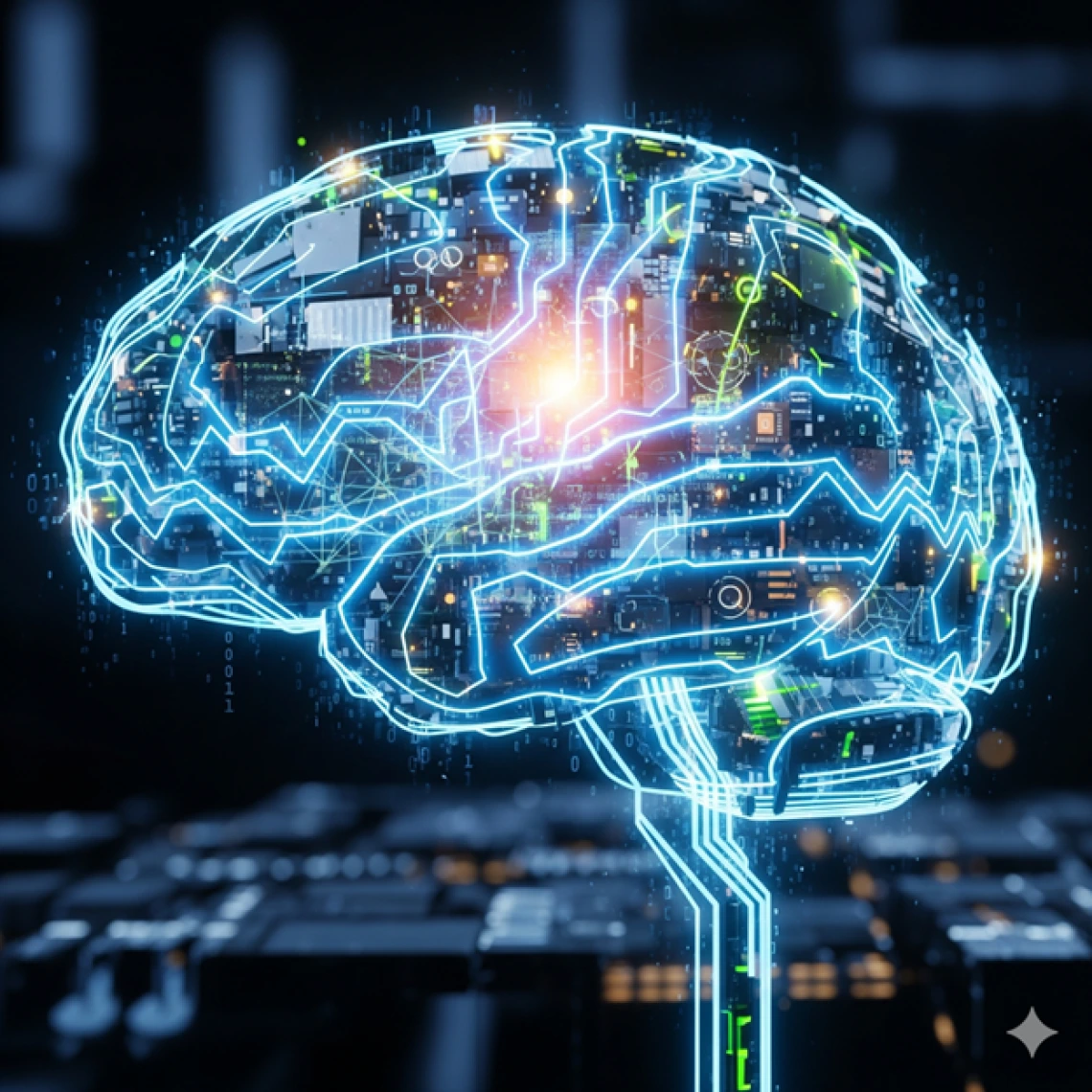
This image is of a digital brain. It is very similar to a motherboard with computer chips and data pathways.
by Corinne Burbank
Every operating system has system requirements. Accommodations are the system requirements for neurodivergents. In many cases, the documentation that an employer can require for the most basic of accommodations can be a burden. It is often claimed to be in the interest of fairness. To a critical eye, it’s to deny an accommodation.
An employee seeking to wear headphones or earplugs to reduce distractions may be told that it is unfair or unprofessional; that same employee could then be reprimanded due to reduced productivity because they are distracted.
As humans, we all want the same thing. To contribute and have a purpose. For most of us, that means having a career we enjoy and the appropriate support to excel in that career. There is a certain dignity that comes with being self-sufficient, a dignity that is often denied to the neurodivergent community due to misunderstandings and a lack of accommodations.
If we consider that neurodivergent individuals are running a different operating system than neurotypicals, we can begin to see that they are an underutilized asset in most work environments when supported.
Humans are biological computers
The human body is akin to a computer with input, output, and data processing. Our senses -- touch, taste, sight, smell, and hearing -- are all input sources. The speech and sounds we make and physical actions we take are all outputs. Like a silicon chip, our brain only has so much processing power.
The neurotypical brain is usually able to create a hierarchy, assigning importance to the information coming in and the data being processed. Neurodivergent brains don’t always have that ability. All information has the same importance and must be processed immediately. This data overload can and often does lead to a system crash, i.e., a meltdown.
What is Neurodivergence?
Neurodivergence is an umbrella term used to describe individuals whose neurology may cause them to process information from the world around them differently than their neurotypical peers. ADHD, Autism Spectrum Disorder (ASD), and Obsessive-Compulsive Disorder (OCD) are some of the more commonly known, but there are several more.
Neurodivergent individuals make up only about 20% of the population and as many as 40% are unemployed. Unemployment is eight times greater than in the general population. This employment crisis is most acutely felt in the autistic community, among whom as many as 85% of those with a college degree are unemployed or underemployed. Burnout that results in job hopping compounds the issue. This creates a burden not only to the unemployed individual but also to the social systems that they would then rely on to support them.
Advantage vs. accommodation
There are many misconceptions surrounding work accommodations; individuals who do not need them see them as an advantage. But it is important to remember that people who have accommodations have disabilities; they start at a disadvantage. Accommodations are an attempt to level the field, but even with accommodations, many neurodivergents are overclocking most of the time.
Some common traits that may require simple accommodations are time blindness (perceiving time accurately), working memory (remembering tasks), and misophonia (sounds can trigger a fight-or-flight reaction). For most employers, these could be accommodated by flexible working hours (not reduced), adding tasks to a shared digital calendar rather than verbally communicating them or sending emails, and the use of earplugs or headphones.
When properly accommodated, neurodivergents can have several characteristics that can be highly beneficial and increase efficiency when added to the workforce. An acute attention to detail, effective long-term memory, and atypical pattern recognition would allow a neurodivergent employee to notice and recall small details that may otherwise have been overlooked. Because neurodivergents process information differently, they can offer previously unconsidered solutions to problems and notice redundancy in repetitive tasks.
At the same time, this heightened efficiency may result in additional workload. The typical neurodivergent employee can take on additional tasks, but it must be done in a way that works to their strengths to avoid exacerbating the mental fatigue that is a key feature of almost all neurodivergent disorders.
Ignorance of neurodivergence has led to civil and human rights violations. Authority figures often use symptoms and lack of accommodations as justification for discipline, such as write-ups or termination. It is not at all uncommon for neurodivergent employees to face retaliation once they request accommodations.
“If you’ve met one person with autism, you’ve met one person with autism.”
- Dr. Stephen Shore (ASD advocate)
Existing Protections
While several protections currently exist for neurodivergent individuals in work environments, they are often not enforced for several reasons, the most common being that the employee may not fully understand their rights.
Title 1 of the Americans with Disabilities Act (ADA) requires employers to make accommodations and ensure access for ALL disabilities. Likewise, the United Nations Convention on the Rights of Persons with Disabilities (UNCRPD) Articles: 5 (equality and non-discrimination), 9 (accessibility), and 27 (work and employment) also ensure these rights.
In some cases, employers do not want to provide accommodations as they are viewed as costly or as giving preferential treatment (or an advantage) to disabled employees. Violations can be filed with the ADA or EEOC (Equal Employment Opportunity Commission), but investigations can be time-consuming, and violations can be hard to prove.
In Conclusion
While the inclusion of all forms of disability has advanced tremendously in recent decades, neurodiversity has been an unfortunate afterthought. We would not force an operating system on a company, as they know the requirements they need to operate in. Why can’t we treat people the same?
Within diagnoses defined by spectrums, we still have stigmas of the profound and stereotypes of the extremes. This has created what John Galtung coined “structural violence” aimed at neurodivergence in many environments, but we see it most profoundly in employment disparities. By removing the arbitrary burden of “professionalism” and properly accommodating a valuable resource, companies will see an increase in efficiency, and the economic strain caused by chronic unemployment will be reduced for neurodivergent employees and society.
About the author: Corrine Burbank MA, is a recent graduate of the U of A Human Rights Practice Program. She is a defender of children with special needs and has expanded her advocacy to neurodivergent individuals like herself. She has faced discrimination in both academics and employment due to her disabilities and hopes to change the outcome for others like herself.
To read more about this blog series, you can visit: Perspectives on Neurodivergence: A two-part op-ed series
To read the other article in this blog series, you can visit: Masking and Closeting: How neurodivergent and LGBTQ people fake another identity to stay safe and successful